Project / 04 · Automation
Design from marble waste stream
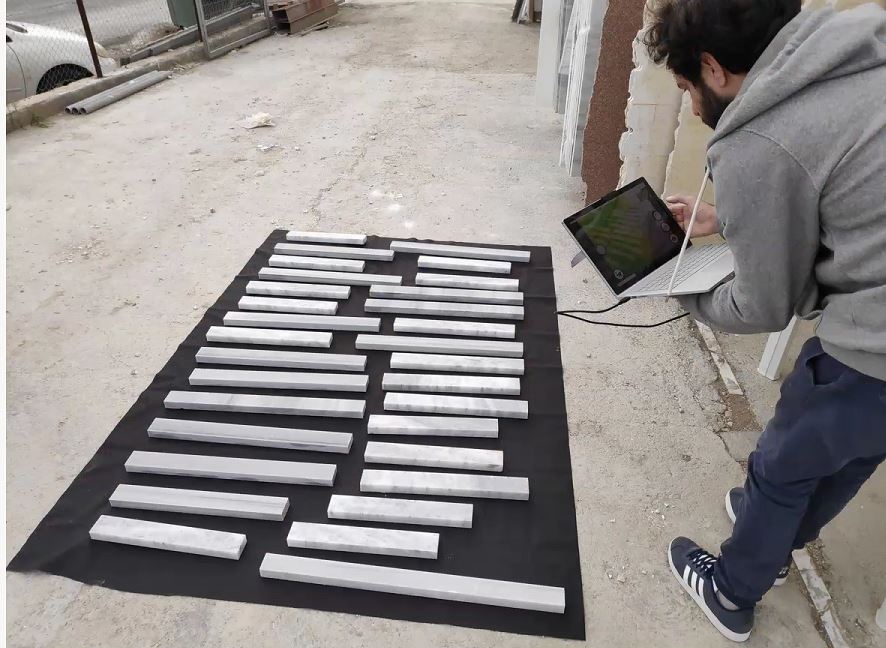
Database of waste marble cut out blocks
During the production of marble items, a significant stream of discarded marble blocks remains underutilised. In collaboration with the University of Nicosia, this project explored how parametric modelling could transform these existing resources into components for generative installations in the build environment..
A digital database of the available marble blocks was developed through the following workflow:
- 3D scanning — Individual blocks were scanned against a contrasting background to capture both geometry and colour.
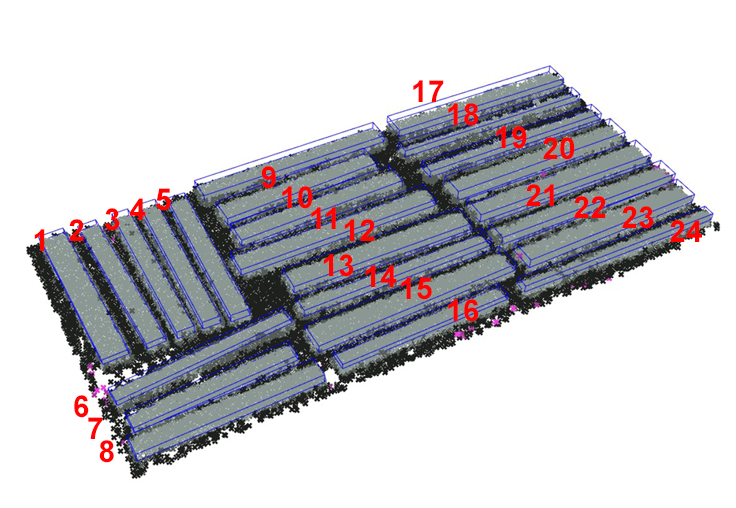
- Point-cloud processing — The scans were post-processed and segmented to isolate the marble blocks and remove the background.
- Geometric extraction — Bounding boxes were generated to extract the length, width, and height of each block as numerical data.
- Data export — The resulting dimensions were compiled into an Excel database, ready to be integrated into a Rhino + Grasshopper workflow for parametric design and automated block allocation.
Unsorted dataset to design elements
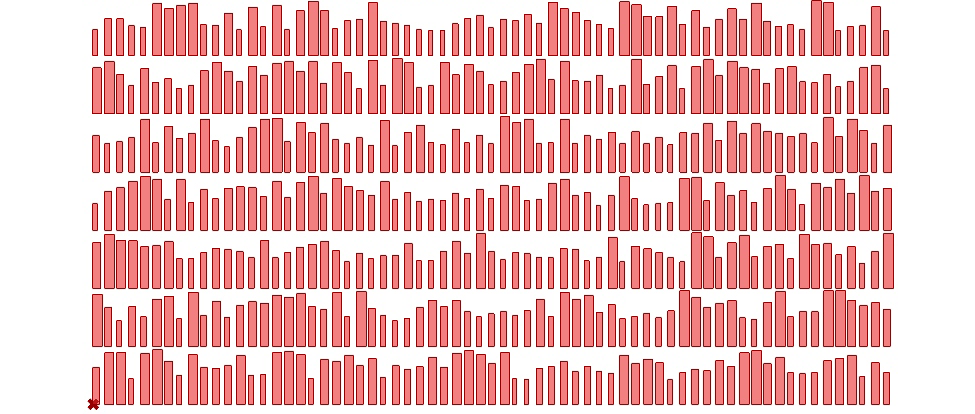
In the Rhino environment the numerical data from the Excel file can be converted back into geometry for visualization purposes. The team was given design freedom to develop any structure of choice from the dataset.
After exploring several design directions, the team continued further with a concept in which the main set of objects is subsampled and the blocks within it are ordered by length. This way two base design elements are created - a pyramid or triangle structure (0) and its inverted variation (1). As the thickness of the items was consistent, it was possible to stack the blocks with a predictable height.
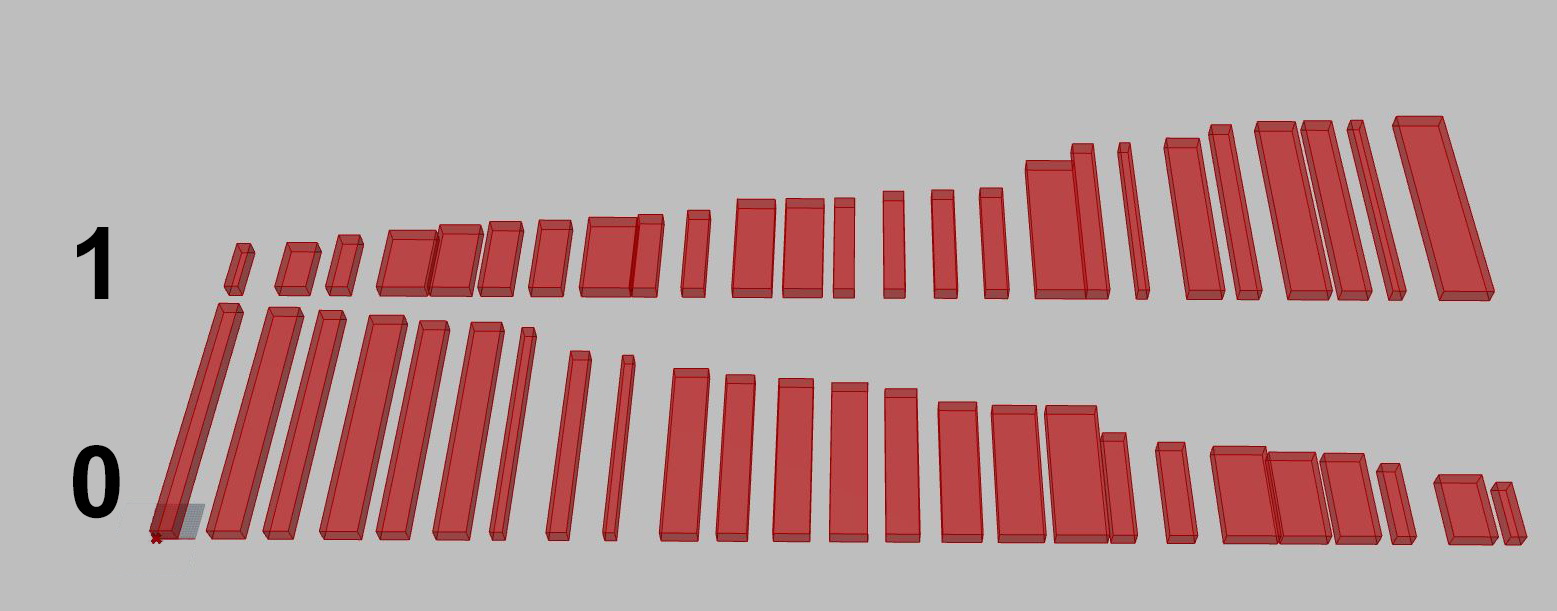
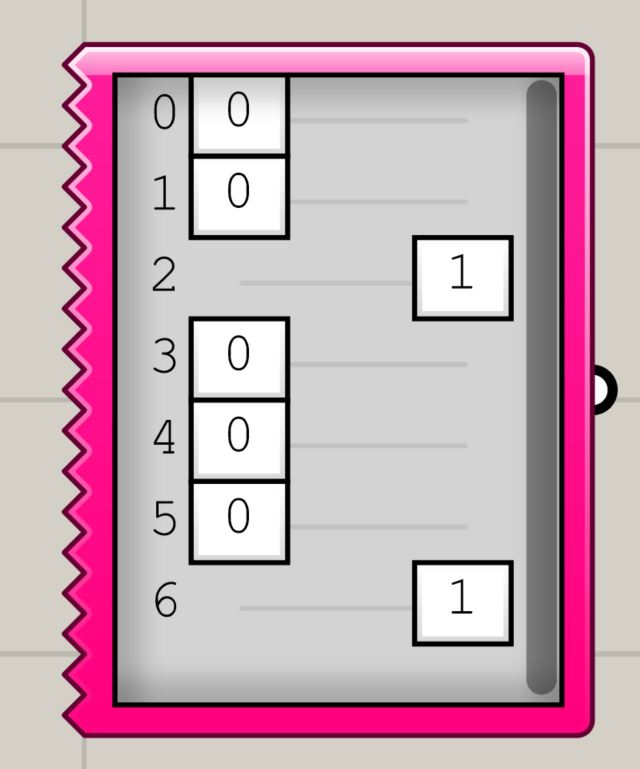
The user can choose the sequence of the pyramid shapes to create an interlocking wall structure. The concept is further developed to function not only as a flat wall but also as a stand-alone curved structure.
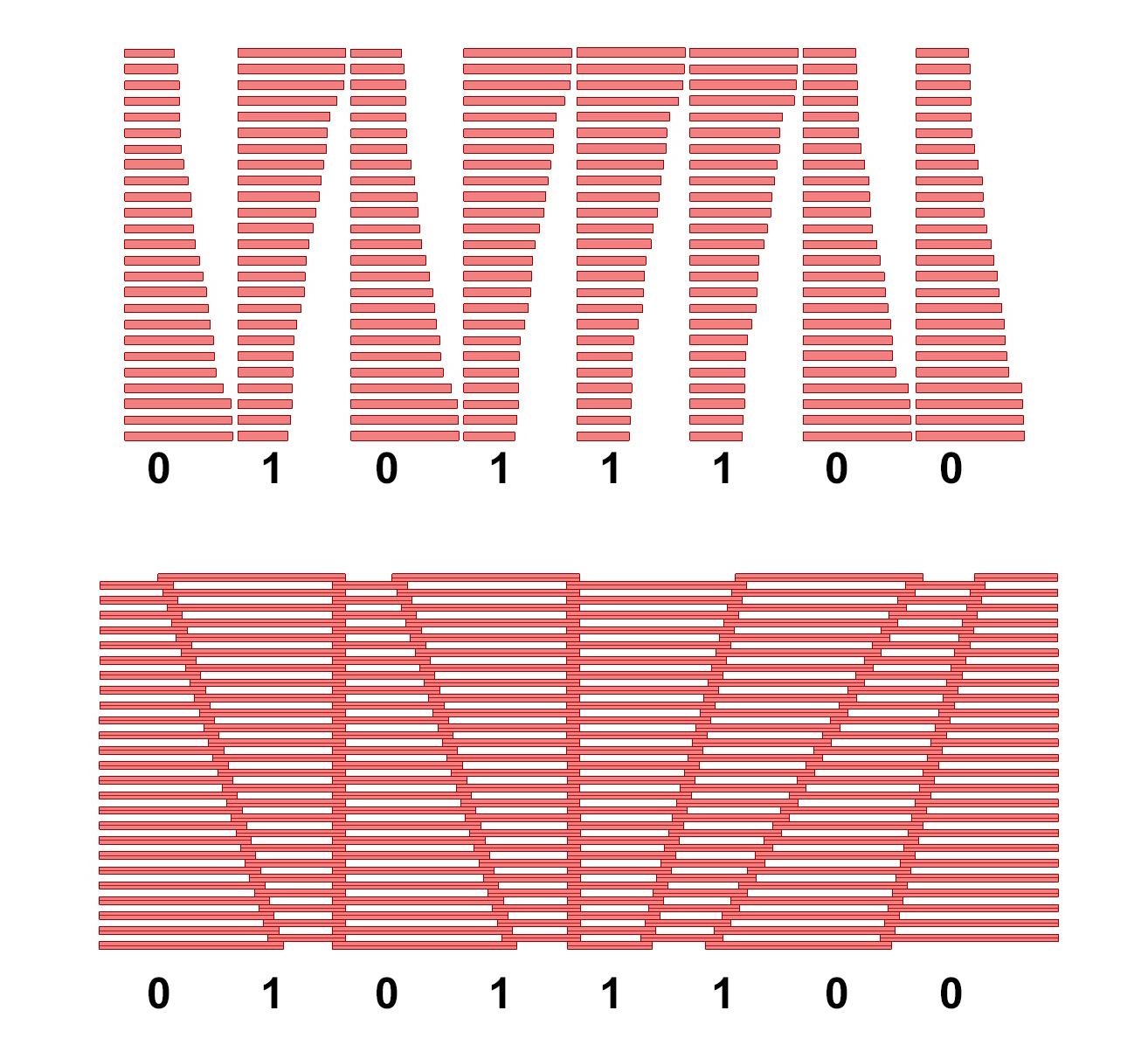
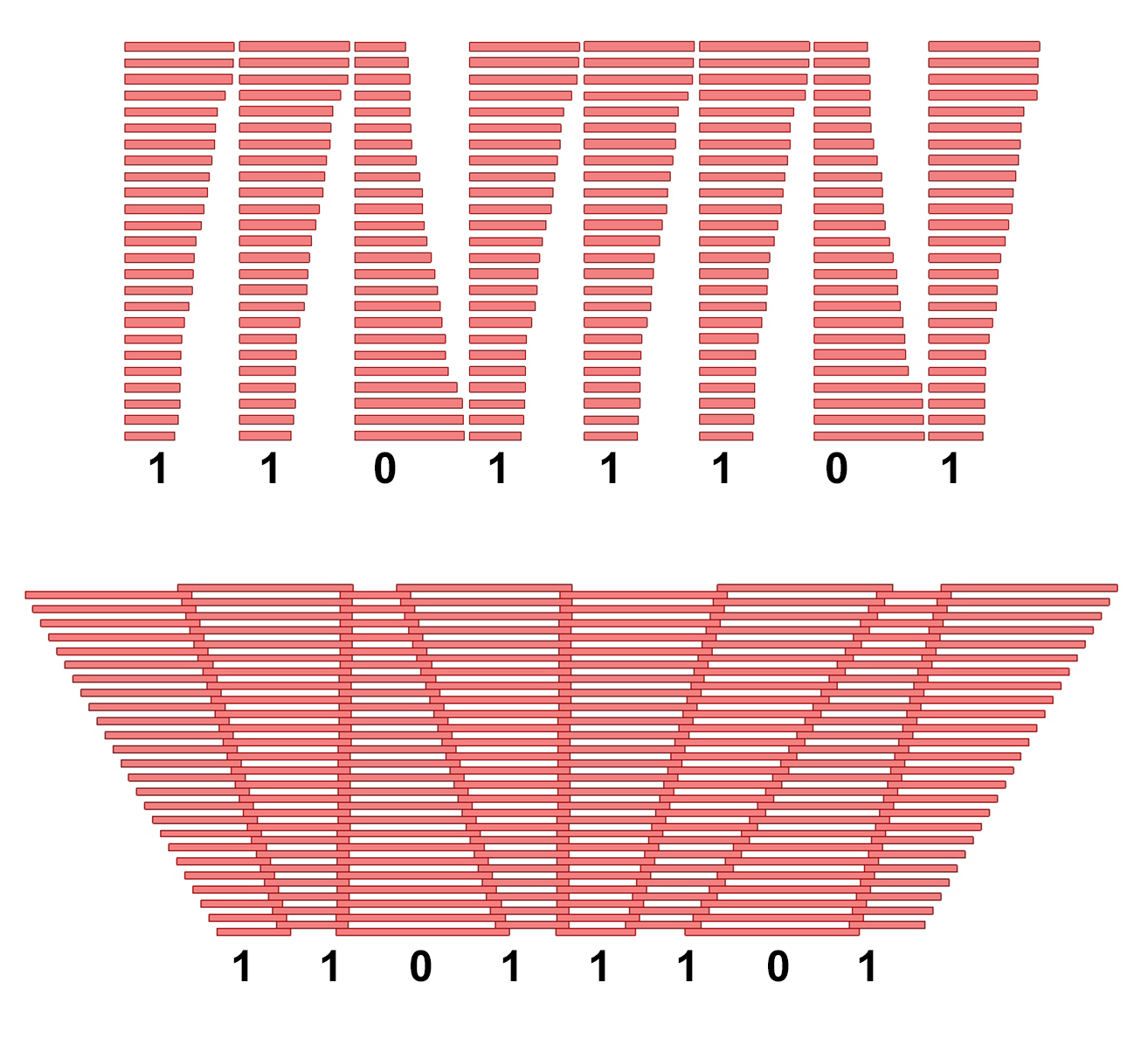
Marble wall design steps
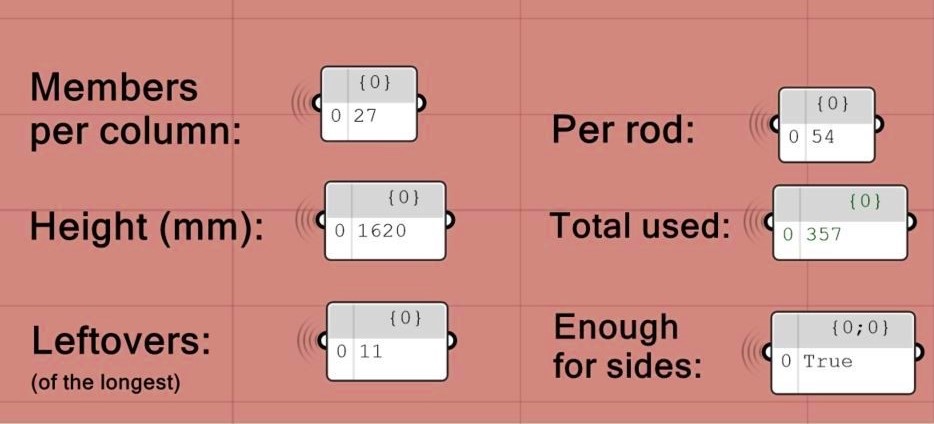
Script feedback, statistics and production
The structure contains three types of blocks: complete, halved and partitioned (corner pieces). Once the structure is generated, the script returns real-time information on the usage of the marble blocks and whether there is enough items in the data set to complete the object or design changes need to be made. Information on the total weight, final dimensions, overturning moment (stability), production time
Design-specific nomenclature is generated and linked to the original part numbers. For example, ”501-C2-15” would communicate: scanned item number #501 - Column #2 - placed in 15th position.
Sorting by block type, number, size, or location within the structure was scripted to streamline organisation and production for the manufacturer.
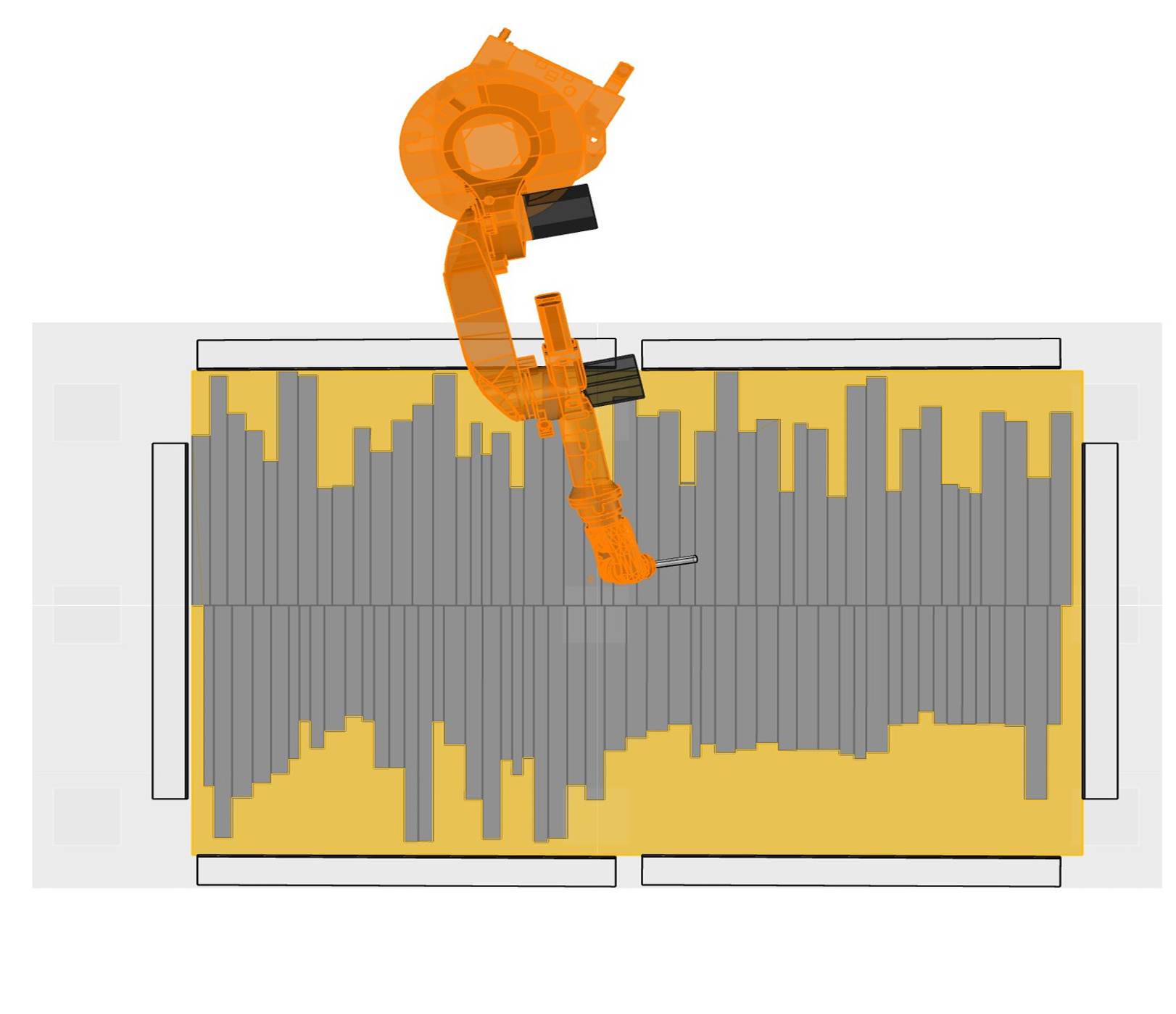
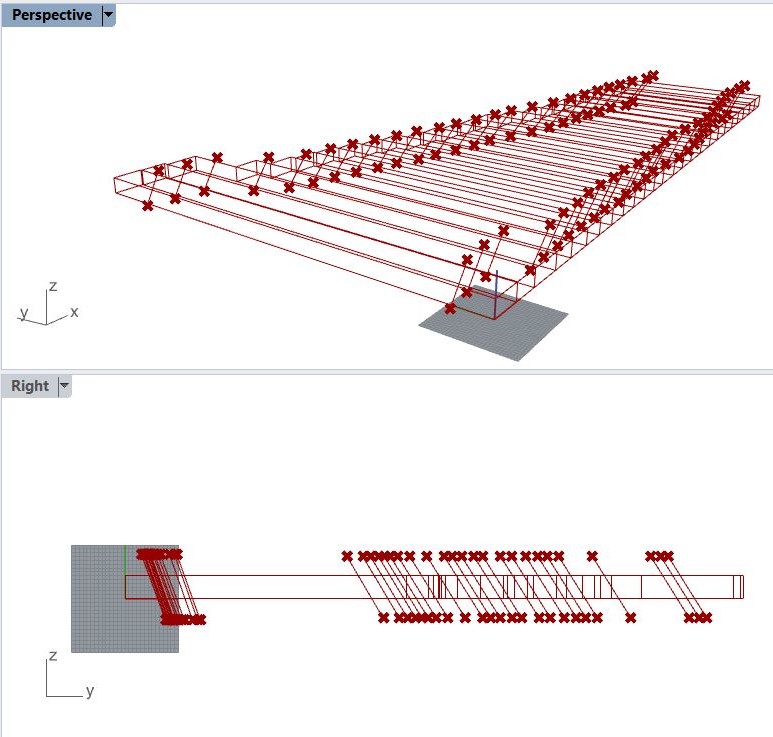
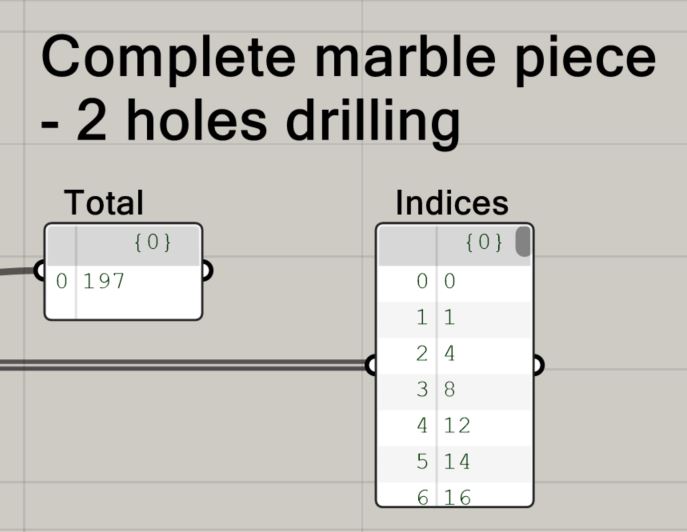
Marble blocks are sorted, grouped, aligned and fixed to a position. The drilling targets are generated and a machine toolpath is compiled to make the holes needed for attachment at the correct place and angle.