Project / 06 · Applied Research · Parametric Design
Fish Ladder & Dam
Two sites. Two strategies. One question for 3D-printed water infrastructure.
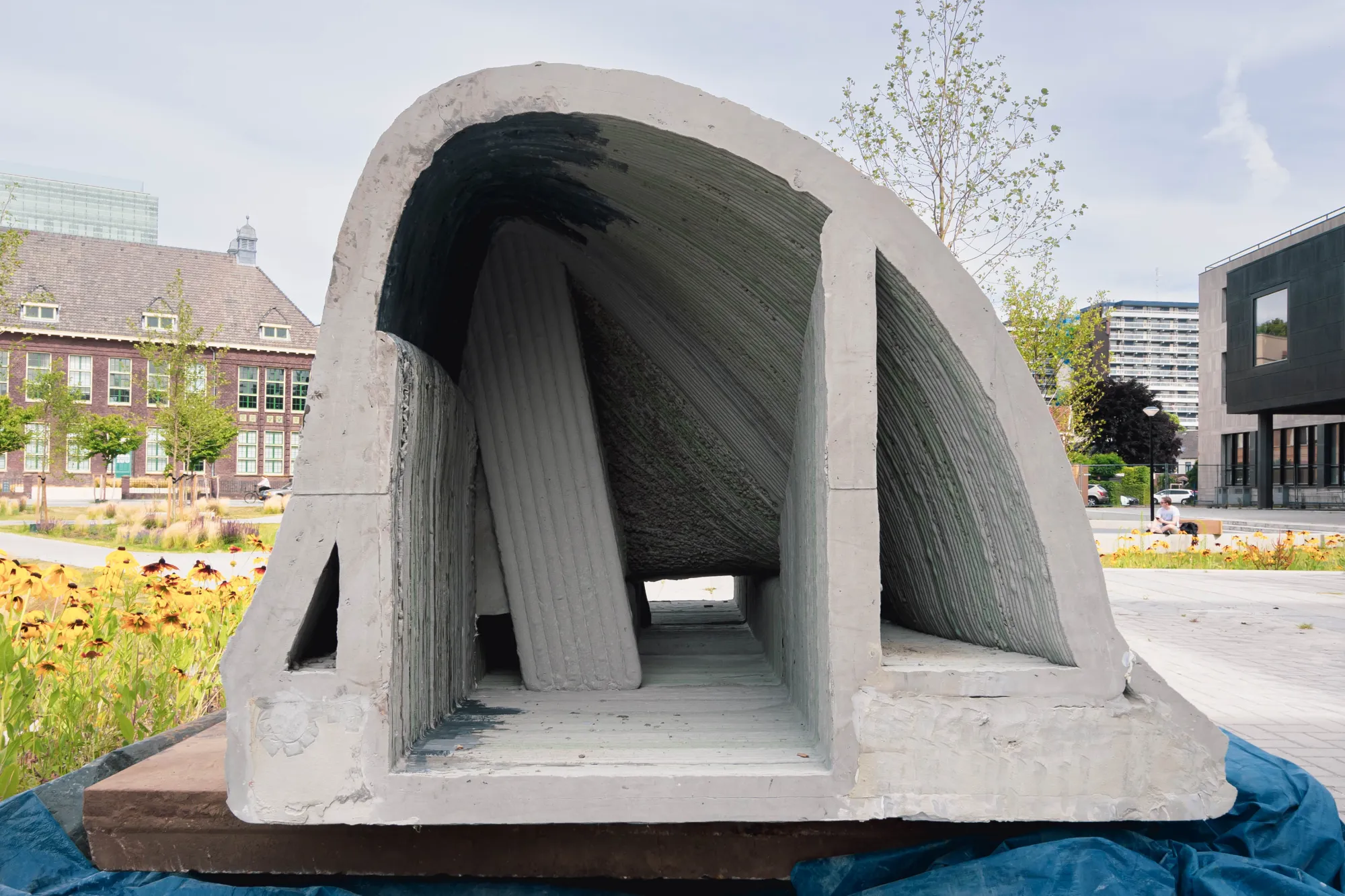
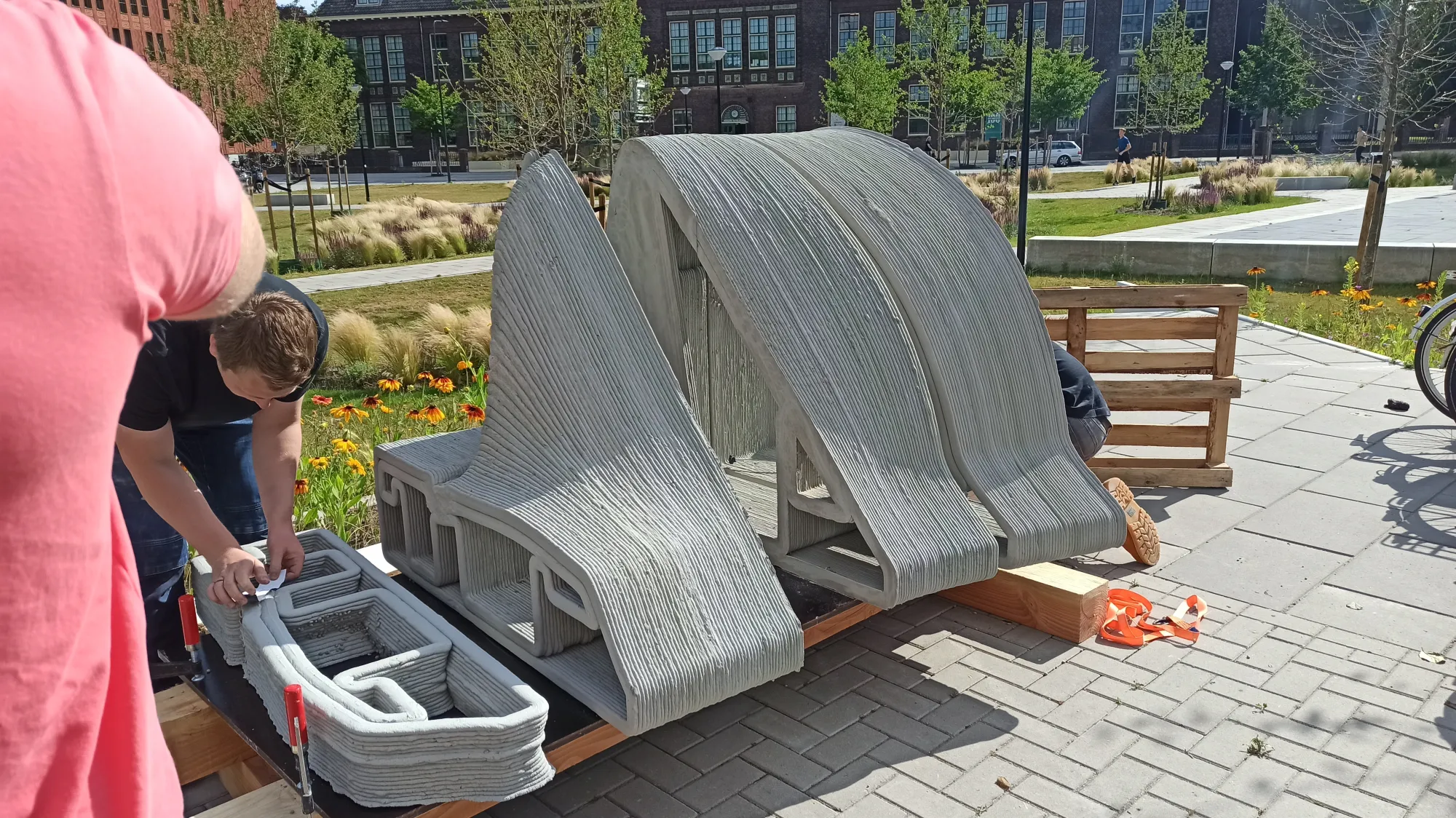
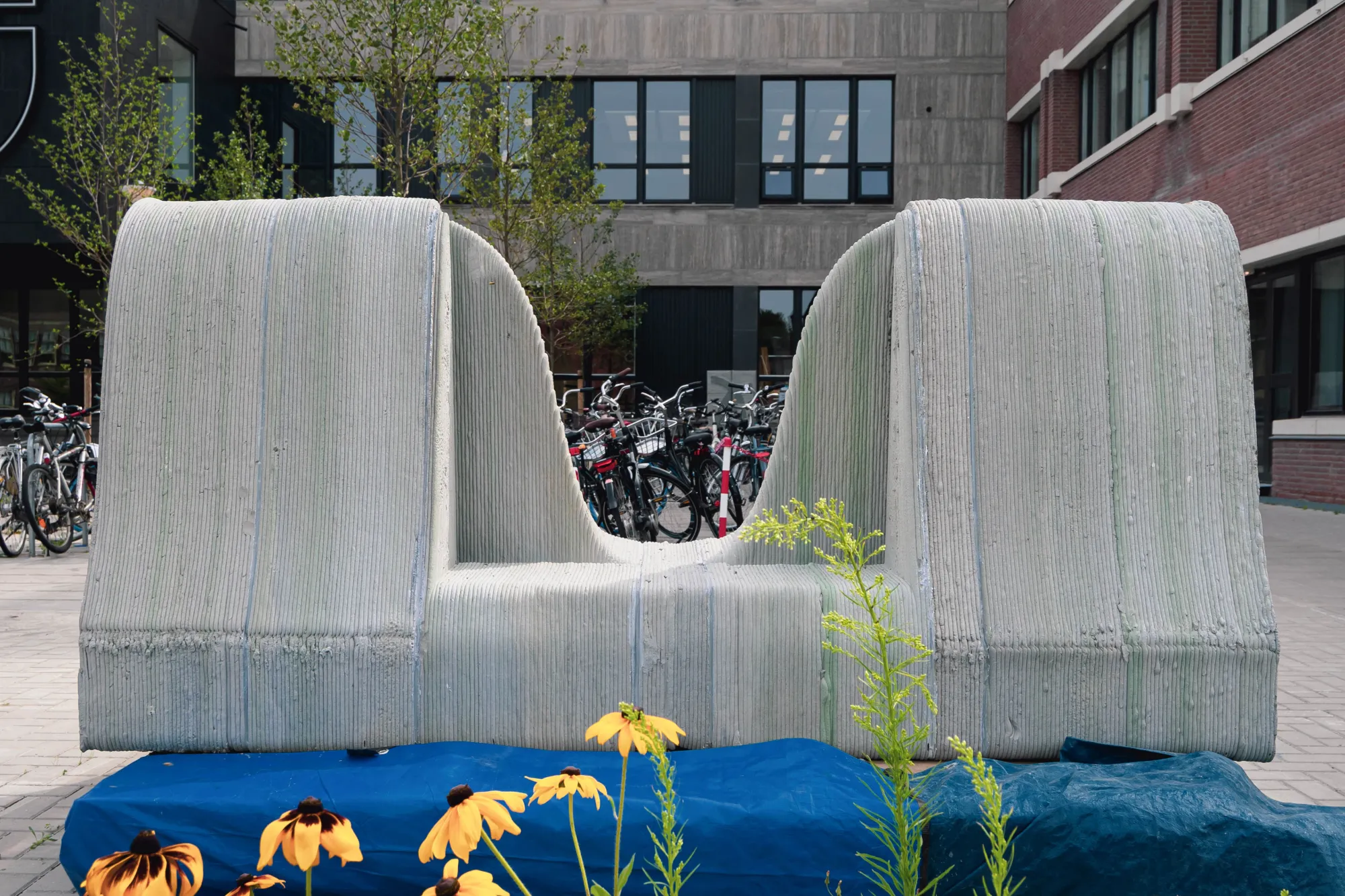
The Netherlands
Design the right thing, produce the right way
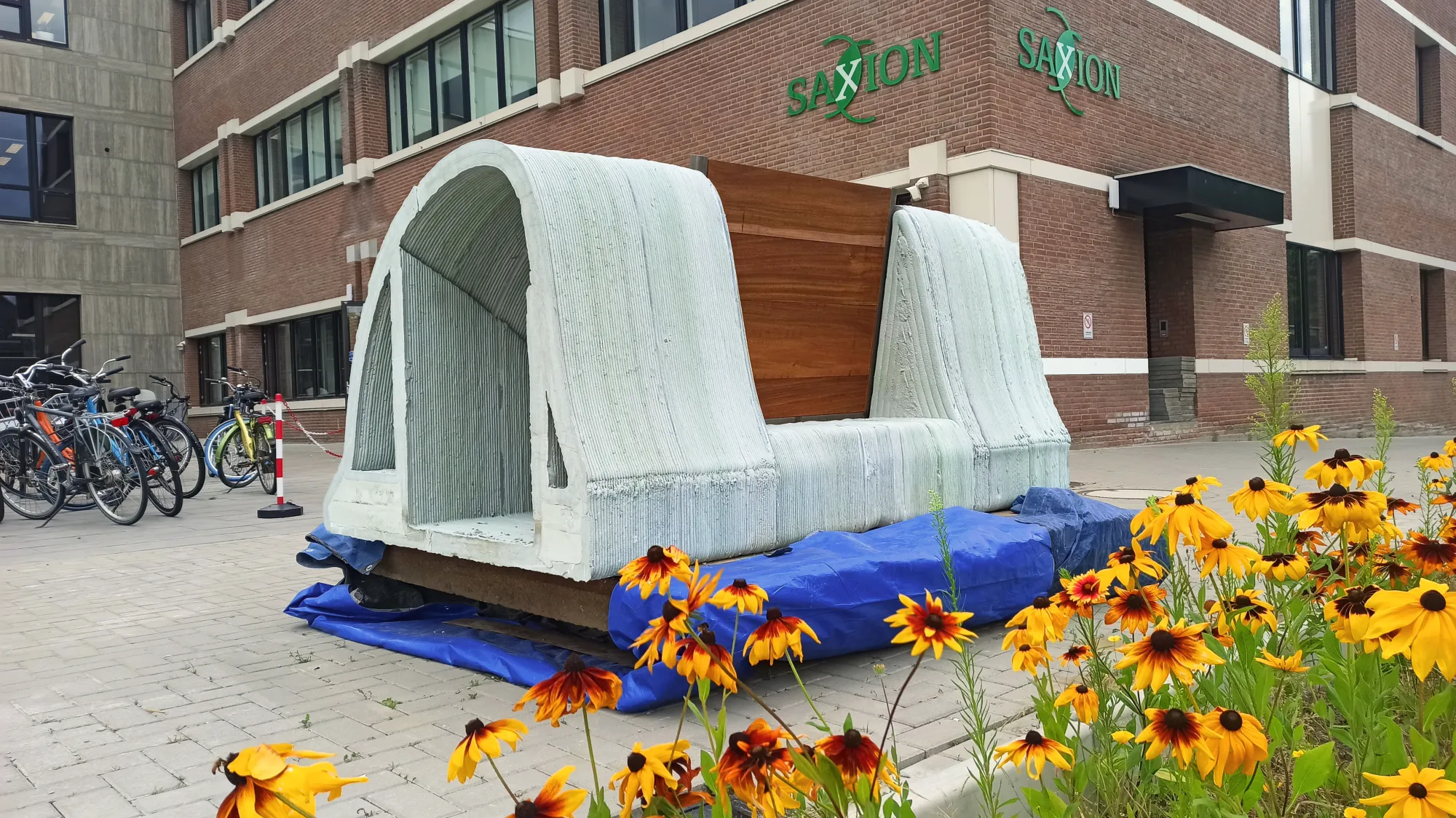
Because the structure is installed outdoors and exposed to the elements, its functional, installation, and maintenance requirements had to be understood together. This led to six key design requirements:
- Controlled water flow — directing water reliably along the intended path.
- Ease of maintenance — allowing leaves, branches, and other debris to be easily removed.
- Integrated performance — combining an organic, natural exterior with an engineered inner structure to meet the loads and stresses.
- Long-term stability — preventing the structure from gradually sinking or shifting over time.
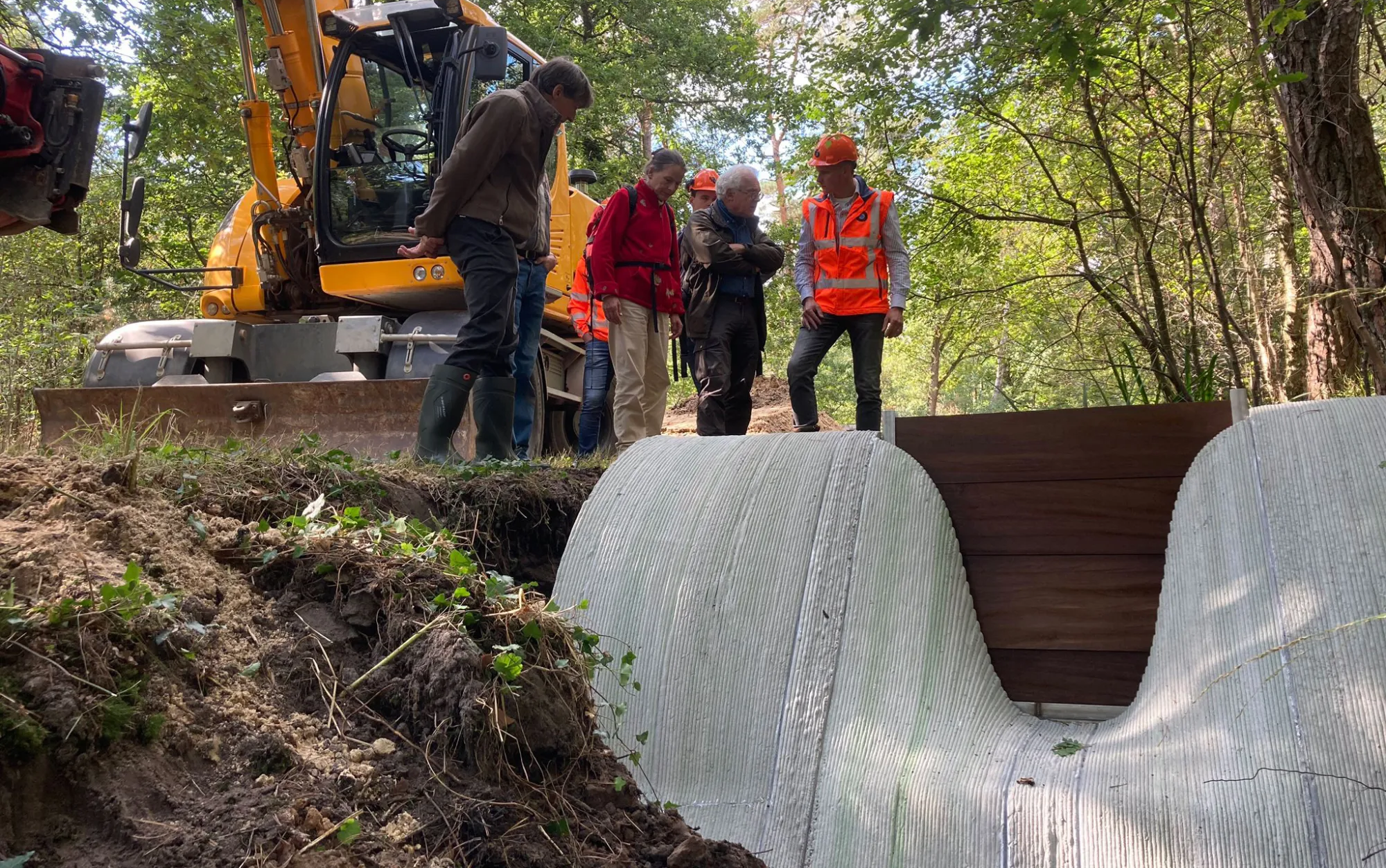
- Ground integration — keeping the structure securely embedded in the riverbed and preventing exposure over time.
- Integrated gate mechanism — incorporating a housing for a gate capable of completely stopping the water flow when required.
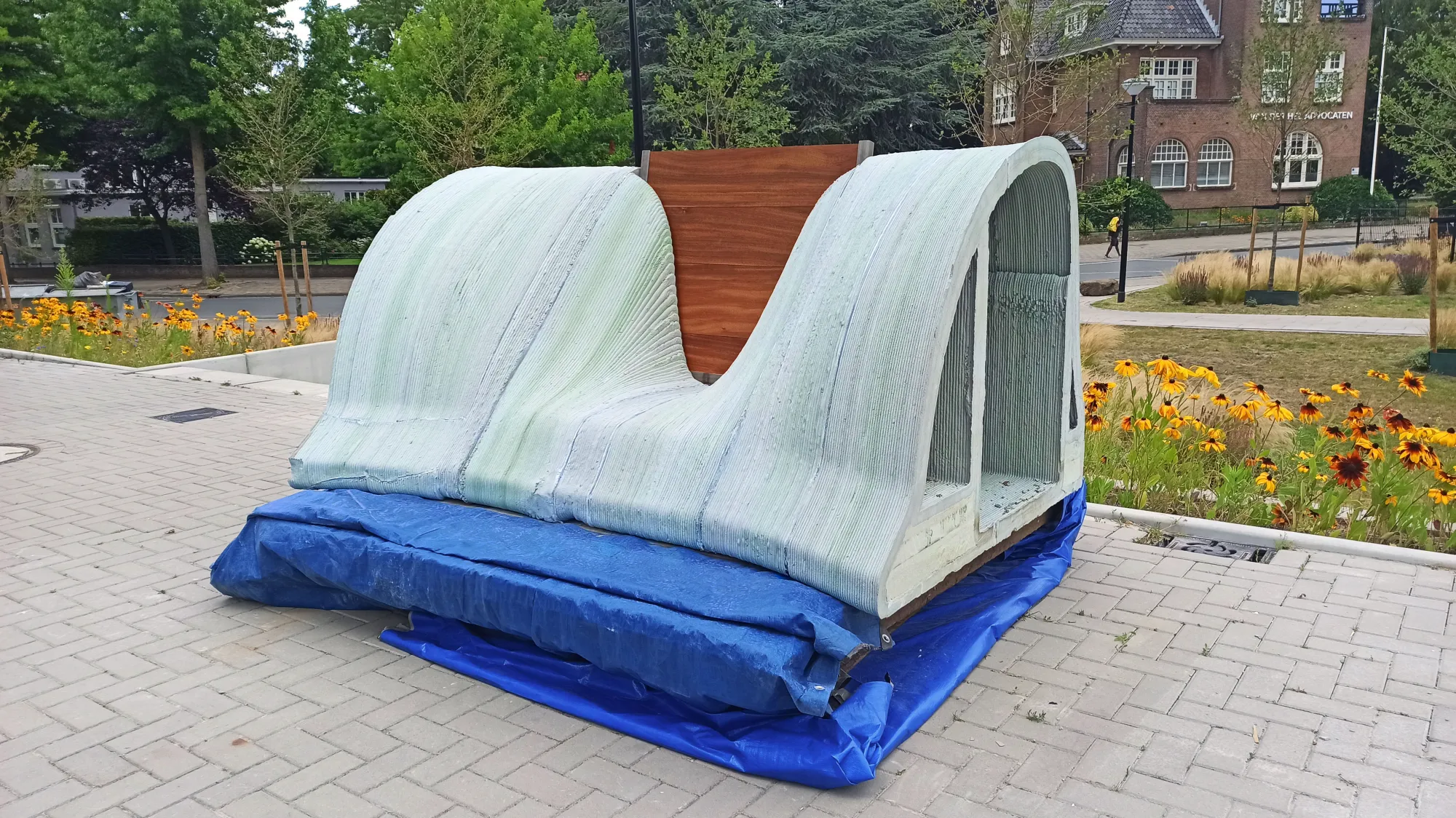
Canada
Design over a terrain scan
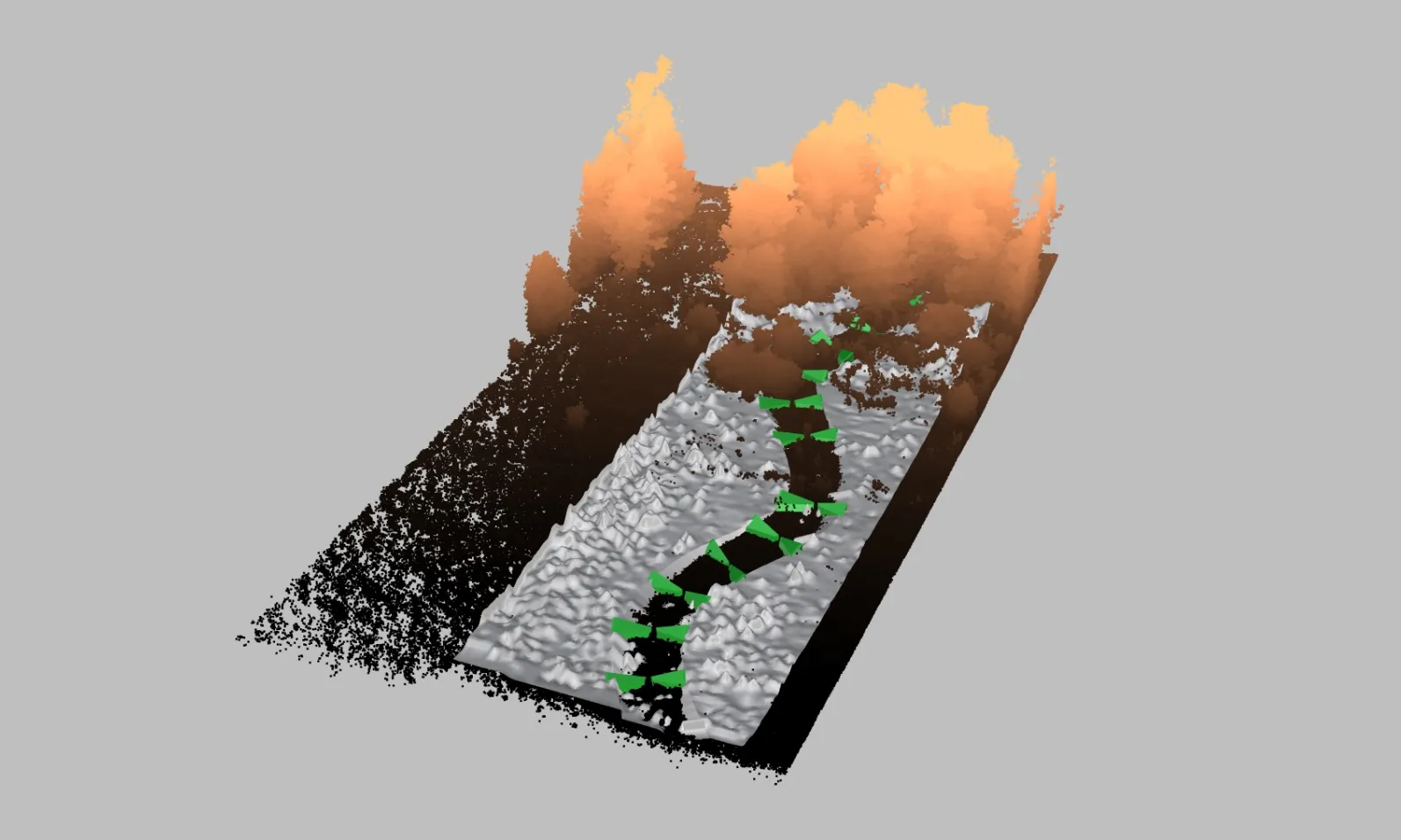
Point-cloud data provided by the Twente Additive Manufacturing team enabled the terrain to be accurately mapped, allowing the proposed path to be evaluated in relation to the existing landscape, construction constraints, and logistical requirements.
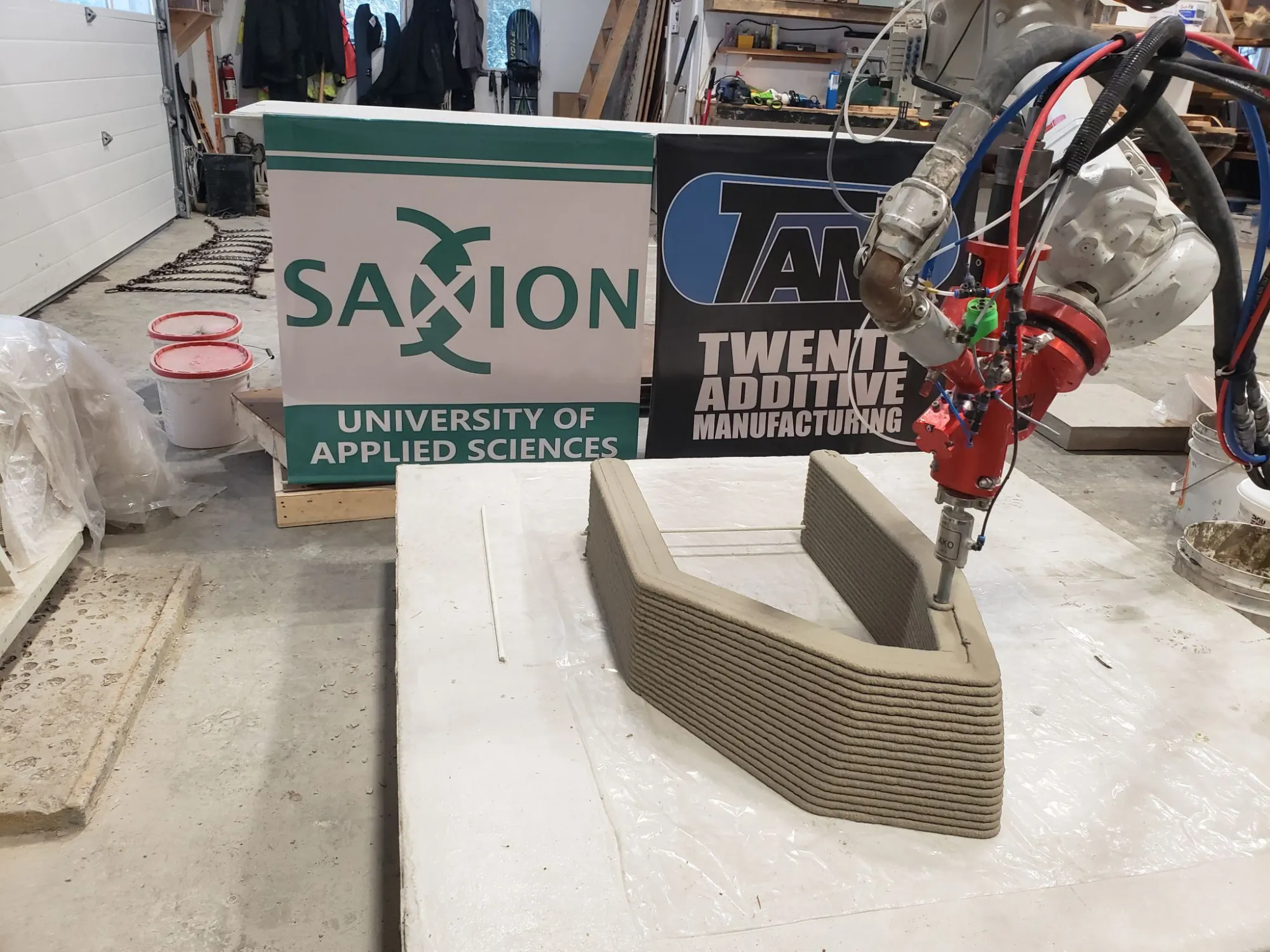
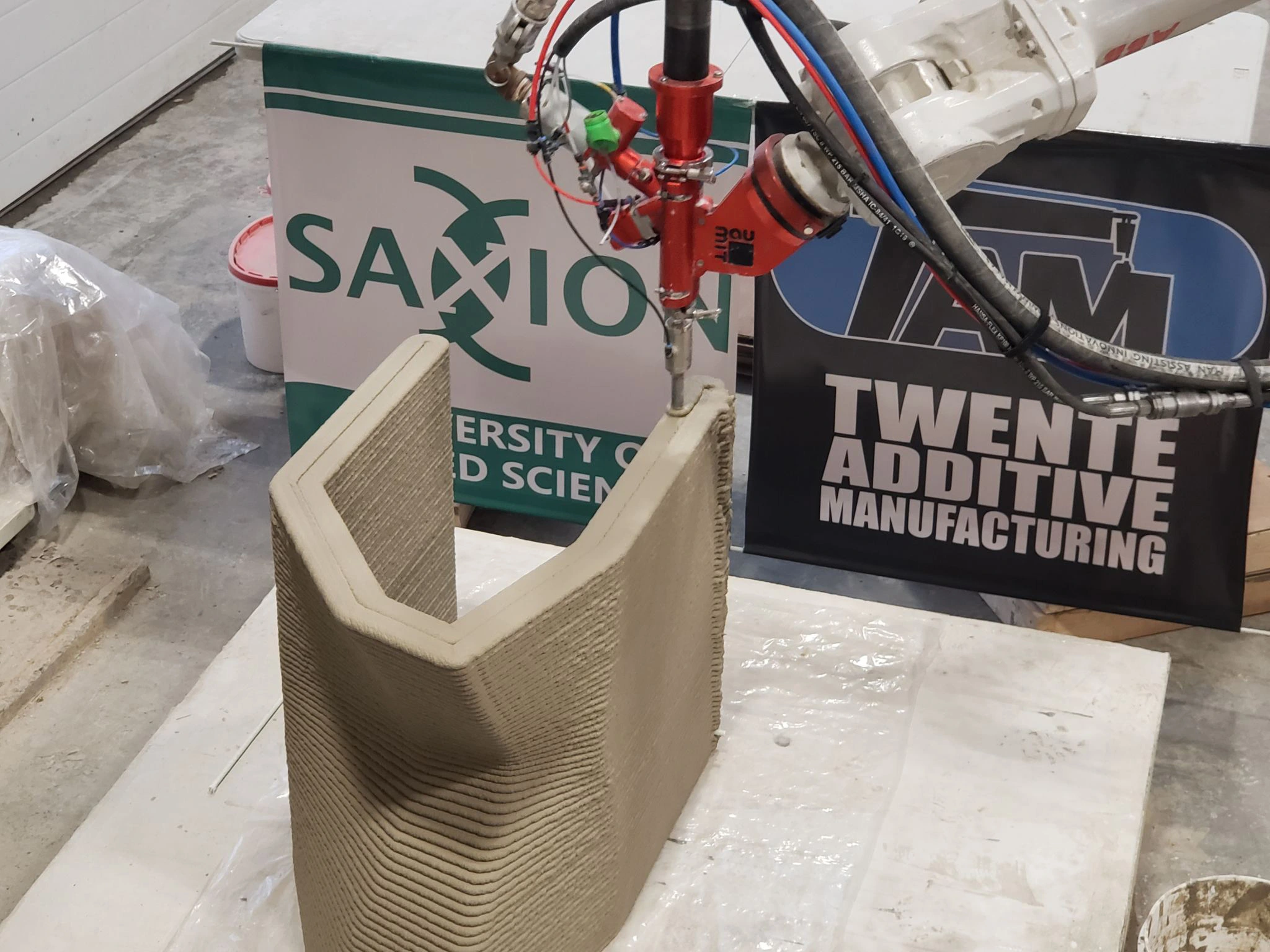
The environmental data informed the design parameters of each individual step and the overall composition. Within the technical constraints of concrete 3D printing—including allowable overhangs, layer geometry, and print time—multiple prototypes were fabricated at TAM’s facilities to test and refine the proposed solutions.
Flow simulations of the generated design iterations provided further insight into water movement, informing the development and refinement of the final geometry. The models evaluated whether the expected resistance and turbulence would meet the requirements of migrating fish.
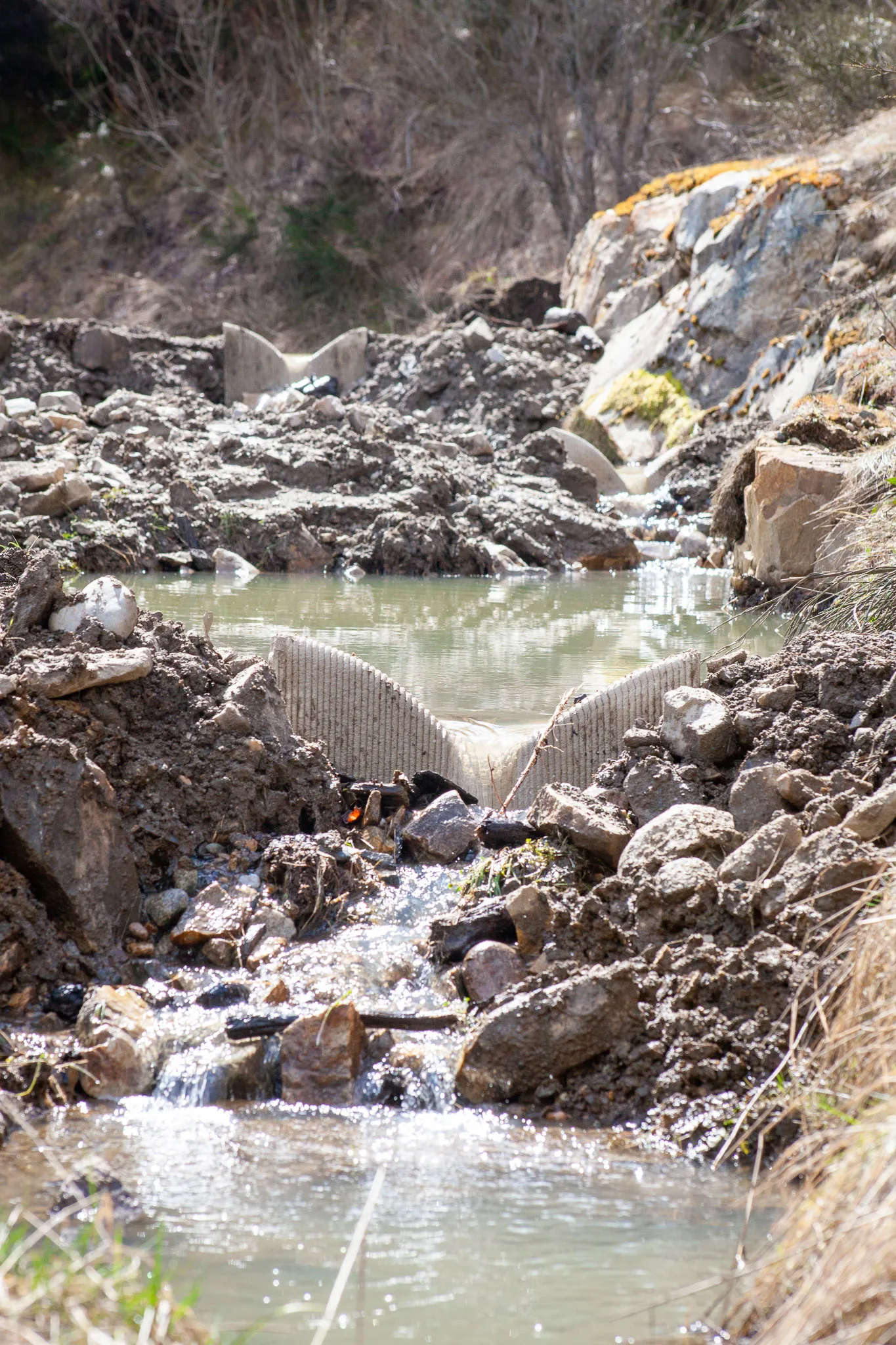
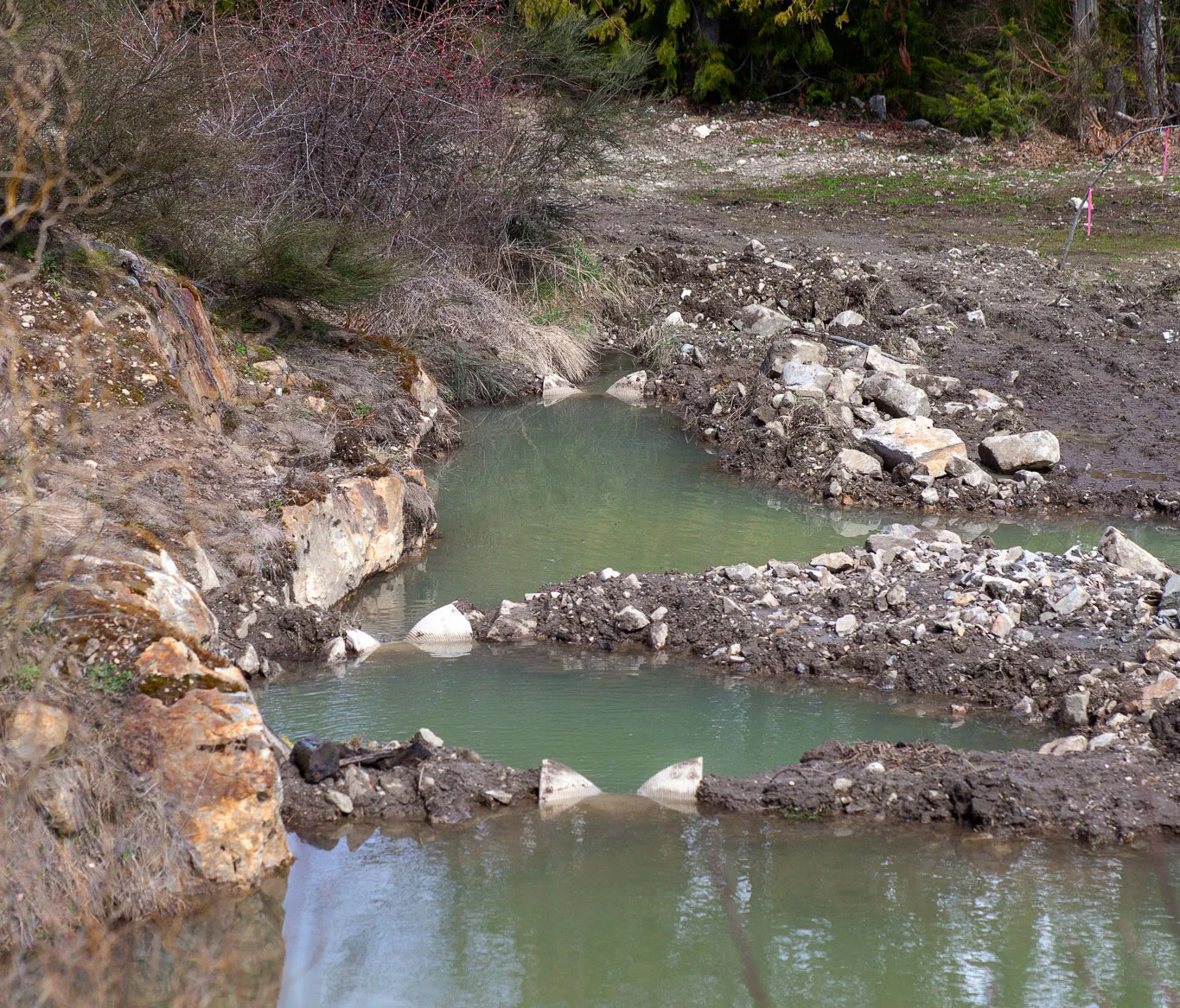
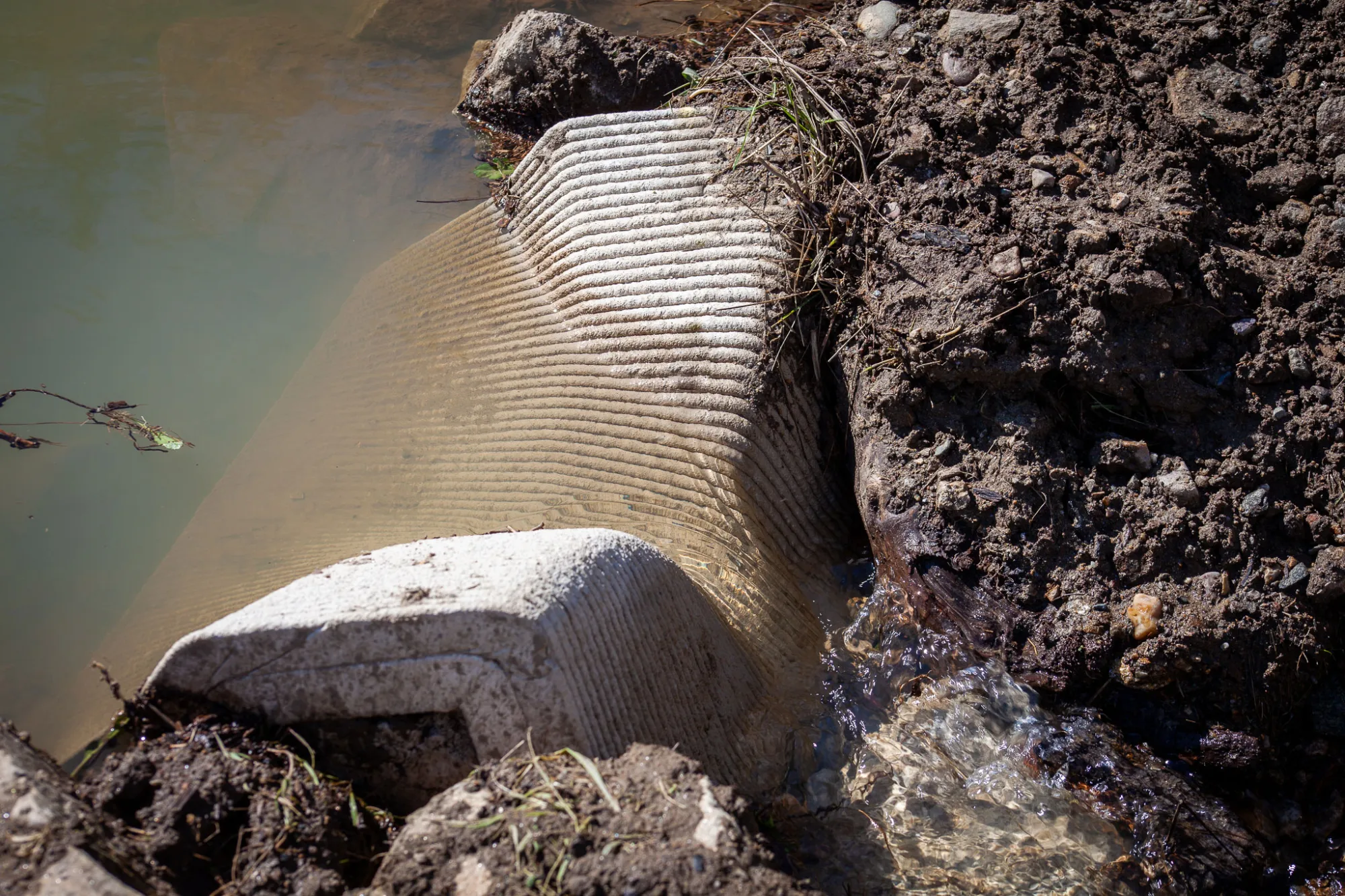
Site-specific steps in operation
Embedded directly into the terrain, the printed elements form a sequence of stepped pools that work with the existing stream rather than imposing a separate structure on it.